Loving it like McDonald's.
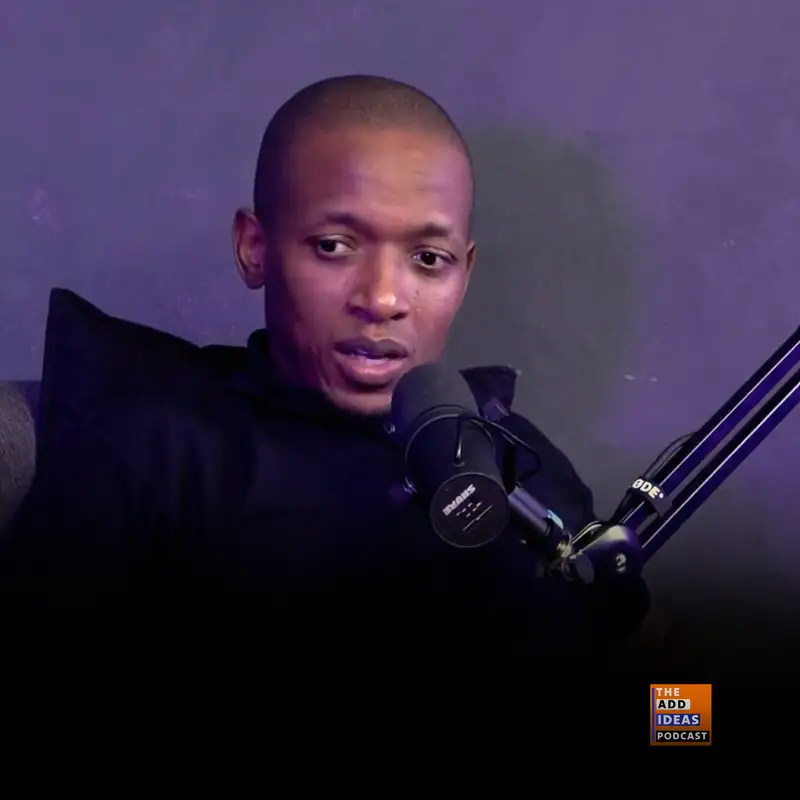
Bandile Mndebele:That's a good one actually. Loving it like McDonald's. Welcome to the Add IDEAS Podcast. And today is no other different day besides us putting out other more ideas to be more creative and to be more inclusive. Well, one of the things that are quite meaningful is disability.
Bandile Mndebele:Where do you begin? What do you say? And how do you go about it? Well, I wonder no more because today I'm joined by an expert himself who has done numerous fieldwork, numerous contributions to the body of work about disability rights, activism, as well as bringing about solutions to life. And I'm happy to introduce one either Bongani Mampumulo.
Bandile Mndebele:Is that right? Thank you. Close enough. Close enough.
Bongani Mapumulo:I'll take it.
Bandile Mndebele:You can read you can correct me as well. Like Mampumulo. Mampumul0. Yeah. I
Bongani Mapumulo:was I was supposed to have an h between a u and the m.
Bandile Mndebele:And then what happened?
Bongani Mapumulo:Yeah. Apparently, my father was filling out the certificates and I think he got excited that he just, you know, got a new son and we forgot it.
Bandile Mndebele:Yeah. So it made a big world of a difference,
Bongani Mapumulo:I'm sure. Yeah. Yeah. Yeah. No.
Bongani Mapumulo:I'm kidding. Yeah. Others in my family, they don't have ages. So Yeah. Yeah.
Bongani Mapumulo:We have a tribe within a tribe.
Bandile Mndebele:Yeah. No. Bongani, thank you so much your time, and thank you for joining
Bongani Mapumulo:us today on the show. Finally, we get to do it.
Bandile Mndebele:I was debriefing earlier. Like, it took us a year to get together. But before the year, we were passing each other
Bongani Mapumulo:For at
Bandile Mndebele:at at on campus, at university when we were studying together. One of the things that stood out quite well, and I think many of people who would also probably share the same sentiment is your rigor and your passion to bring about a real lived, improved lived experience for people who are not just tackling day to day, but who want to be aspirational in their day to day. Connect us with how you came about making a difference, moving the needle. And where do we begin with disability?
Bongani Mapumulo:It's it's the it's a I'll say it's a few moving parts. I think it first began with observing, I would say, observing how your own life interacts with student life and accessibility of spaces and how that influences the way you get to enjoy student life. Because I think we can almost agree that being in lecture halls and attending classes and all of that is only a fraction of what a student life is about. So most of the life that you're gonna live is actually going to be outside, you know, meeting people, talking to people, engaging with people and yeah, just experiencing, you know, that part of life. So when in order for that to happen, you know, you need to be in spaces, you need to visit friends that are living in different races from from from the one you are in.
Bongani Mapumulo:And I remember a very, very close friend of mine. He would always visit me in my residence because there was a lift and he could get to where I stay, but I could never be able to visit him. Because his residence had stairs and basically it is impossible to visit him. Right? So And then more you interact with other people, you're like, Okay, so why some spaces are accessible more than others?
Bongani Mapumulo:So that, I think, sort of like lit that sort of like activism, you know, light, you know, within myself. And, you know, I just started thinking, Okay, if this affects me, it probably affects other people. So I can't, you know, let me just find ways of bringing some of this stuff more to the fore and have a conversation. And, you know, I attended a lot of student functions and discussions, I remember, I think you invited me to one of them. And to hear, you know, what do other people think and let's see if we can push this conversation more to the front.
Bongani Mapumulo:And, you know, sometimes if you really wanna see something, you know, get done, it just helps to do it yourself. So I think that's how, I became involved. And maybe just to add another angle, I stayed in Huis Russell Botman, which is named after the first Black Rector, of the, of Stellenbosch University. And he was really, really big on active citizenship and how he foresaw how the people that live within that residence should understand that they have bigger responsibilities outside of the confines of that particular structure. So as the people that live there, we need to believe that we need to make far more change and more impact outside of just our residents.
Bongani Mapumulo:And yeah, I would say that gave me a lot of belief and, what can I say, understanding that I need to be more active and anything that I believe needs to be pursued, to find ways of pursuing? And when you I love the
Bandile Mndebele:fact that your curiosity began with that big question mark. Why are other spaces accessible And and others when we speak about space, disability, it was also widely encompassing not just the physical environment. But you also touched on the social dynamic of it, you know, like you want to have an enjoyable social life. A life that makes you feel like you're part of the And ecosystem of looking at how the institutional preparedness has prepared you almost in different environments from, let's say, how you start with Huis Russell Botman or Stellenbosch itself to moving across, let's say, to UCT. What would you say is the nuance that institutions can better prepare to at least create an environment where socially and environmentally or physically there's better access and mobility in terms of what we have to do?
Bandile Mndebele:I think
Bongani Mapumulo:layout has a lot to do with it, which unfortunately, you don't get to have much of a say in. For instance, for people that have been to UCT, they'll understand that it's almost like on a slope, which is like uphill.
Bandile Mndebele:The mountain. Yeah.
Bongani Mapumulo:And, and of course, that's gonna affect space and the way it's sort of like laid out and how the buildings are sort of like structured against each other. Yeah. So when you look at that in comparison to Stellenbosch, which is, I think it saves it shaped like a basin in a way. So it's a lot more flat. Meaning you can, for the most part, for walking people, they can go from, you know, one one building to another without needing, sort of like transport, which, yeah, in New Jersey, it's a it's a it's a pretty big thing.
Bongani Mapumulo:They are like buses that's going to take you from rest to, to class and stuff like that which we didn't really see much of in Stellenbosch because you could simply get to where you need to be in a matter of, I don't know, five to fifteen minutes or something like that so yeah, for me, I did live sort of like at extreme ends of the campus because where I stayed, I think it was on Victoria, like, ah, Victoria. And my faculty was right in the middle of Merriman, right? So I remember we having conversations with the disability units at the time. I had a manual wheelchair and they're saying, you know, how does this affect how I function? Know, I remember it was summer, right at the height of February, March, and it was hot.
Bongani Mapumulo:And you know, Stellenbosch, heat can get really, really hot. So it was affecting how I study, how I function, you know, with my academic activities. And that's when they sort of like started having conversations that okay, maybe we need a different assistive device that's going to help you function a bit more better, or I should say, function more in tune with this the layout of the Stellenbosch campus, which was great because that enabled me to sort of know that, okay, I can reserve sort of like my energy for the academic stuff that matters without nearly thinking about my physique as much. Which with the manual wheelchair, it was basically all on me and because it self propelled. So yeah, I think I think from that that sort of like angle, it helped a lot.
Bongani Mapumulo:Maybe to some people it might not, you know, make too much sense. But if you think about a full day where you start, I don't know, at eight and end at four, by the time 04:00 reaches, you might just be finished and you just want to rest or sleep or anything like that. But, you know, student life kind of like, you know, has to carry on. So you've got to think about stuff like that.
Bandile Mndebele:And I love the fact that you gave us a picture, but I think maybe it might be helpful also just to us understand that you're from the life of the biggest challenges that you had to deal with in terms of getting the tech, in terms of getting the access that you need. What would you say in terms of confronting different parties to get your life on the road?
Bongani Mapumulo:How would you
Bandile Mndebele:say are the biggest challenges or what would you say are the biggest challenges or myths surrounding disability itself that
Bongani Mapumulo:you were thinking? Yeah. So I I I would say my beginnings with my schooling. Because when I think about, you know, in within disability you have either inclusive education or special needs education. Whereby inclusive, you basically have a mainstream school, which is gonna have kids that you know, happen to have disabilities, but they are basically all within one setting.
Bongani Mapumulo:Right? Then you have special needs education whereby everyone has a disability of some sort, right? Meaning you don't have to worry about, you know, things that have to do with access and lives and things like that, because the layout is set up for everyone, you know, to sort of like, be able to function and drive in a way. So yeah, the issue of difference is almost like a non entity, right? However, universities aren't like that.
Bandile Mndebele:You know? It's a melting pot of everything.
Bongani Mapumulo:And you might find that, you know, the people that are around you have never interacted in any way with someone, you know, with a disability of any kind. So it's basically, yeah, it's like you're at a very, very interesting sort of like juncture of how are you going to function. So one element that tends to help when it comes to functioning is assistive technology. And had to and I'm saying we as a student and along with the office that sort of coordinates access and functionality for students at the time. The disability unit had conversations with sort of like my sponsors to say, Okay, we have a student who's like this.
Bongani Mapumulo:We know that you're already paying for his tuition and residence and all of that. However, for him to function better, this is what we need to think about. And I guess I can say that it was a privilege that those conversations went very, very well. And I remember meeting sort of like those sponsors, because I think they came around during the course of the year. Just to check on how their investment is going.
Bongani Mapumulo:Anonymously. You know? And, yeah, I I found that it was, you know, a a foundation of, you know, a family from, you know, years ago that actually seek out students that are sort of like in situations similar to myself. And they sort of like helps with grants and but obviously you have to be in some sort of like education setting of some sort. So I guess I was in the right place.
Bongani Mapumulo:And I think it helps that they can tell that you are trying to do something with your life, not just educating yourself, but you're trying to make a difference to other people that are probably in a similar situation with yourself. So I think even that was an introduction to how communicating is important just for your own needs and to be able to advocate for other people's needs. So the fact that they were able to take care of me in that way, it also fueled that active citizenship bug to think, you've got to be able to do more and you've got to try and do more because the more you are able to do for yourself, the more you can be able to do for others.
Bandile Mndebele:Yeah. And you touched on something important aspect, I think I know we've got caught on, about reasonable accommodation. And you talk about agency as well in terms of that relationship as well, or the world of work response or the institutional response to it and what is exactly is reasonable and what is accommodation? Maybe invite us to that journey to how what is reasonable accommodation within this context and how do we become more inclusive?
Bongani Mapumulo:Yeah, it's a very, very burning subject because it tends to be sort of connected to resources in a sense that an institution will understand sometimes that there is a need for a specific form of assistance. But it also has to function within the confines of what is available or what possible, what is reachable in terms of finding resources to help. You know, I can't speak too much on how the world of work functions. Although I've heard some stories about how for some employees with disabilities, for instance, they tend to have problems with being able to adjust or adapt to their sort of like workplaces because you find that an employer will say, Yes, we believe in equality, which means we want to help our employees feel like part of the workforce and they use terms like family and things like that. Yeah.
Bongani Mapumulo:Yeah. Yeah. Yeah. But if you look at it from a point of view of equity, right, equity is actually about what are your specific needs as an individual as opposed to equality of which we are just going to help, you know, everyone with however that we think, you know, the people need of which ones once you talk about equity then it has to be a conversation you know you can't just simply say we think this is what you know you need and this is what we can provide But rather, let's have a conversation about how can we help you function better. How can we help you thrive in this environment?
Bongani Mapumulo:Because if me as an individual, an employee who's part of the system now, if I can function better, I can produce better, I'm able to contribute to this workplace. So for me, that is how I tend to look at how reasonable accommodation is. However, I think it's a conversation that should be ongoing because I think it can always be better.
Bandile Mndebele:Yeah. And I know that you had demonstrated, I think, in your response that the education has been largely on the marginalized. I mean, look at different camps of not just disability. There's also like the invisible part of it, you know, that people are also grappling with, like neurodiversity being the bandwagon or the catch all of your inclusion or how we can be better in this space. Who should be driving the education of how we can do it better?
Bongani Mapumulo:It's hard to think it should be one class or one group, because I think we need each other in some way. For instance, I will make a reference to my experience with Stellenbosch. As much as, for instance, they would say, this is what we can help you with, but it would be in partnership with IT that would be able to tell me that, okay, this is what we have available. And this is how we can help this to, this is what we can provide for you to be able to function better. So yeah, if I would say who should be in charge of the conversation, would say as the users, it's important that we are involved because I think it helps when we co create and produce things that we can take sort of like collective ownership of.
Bongani Mapumulo:Because if you think that as, I don't know, as a tech person or as a tech provider or a designer of some sort. You can just say, Okay, whatever I read on paper is what I'm going to provide just as is. You might fall short or you might miss some things. I think when you have the end users in mind or in the room or as part of the conversation, I think it tends to help have a better product or have a better outcome. You know?
Bongani Mapumulo:So yeah, I really, really believe in collective participation. I think it also helps with networks, you know, for instance, currently, this dips a little bit into my research, my current research. For instance, I'm part of the Bertha Center for Social Innovation and Entrepreneurship. However, the angle of assistive technology touches on health and medical technology, which is almost like another department, which is, I think it's called UCT MedTech, if I'm not mistaken. However, I'm also interested in ethics, you know, of how does how do we use technology for good, you know, and that's a completely different sort of like department where there's a part of me that wants to find a way of how do I get these departments to speak to each other, which is something that I'm really, really excited about.
Bongani Mapumulo:I'm currently doing like a literary review to see how I can find the connections between the literatures. But I think within the short term, sort of like a short term goal that I have, is to get the staff and the units and the departments to sort of like understand how they can co create and how they can help sort of like figure out similar problems using ideas from different, you know, sort of like departments. Because I believe, or at least for me myself, I believe the more ideas you have, the more resources you have when it comes to problem solving. So yeah, I think within my immediate space currently, it's something that I'm really, really excited about.
Bandile Mndebele:Yeah. And I think touching on that take, I think I remember you highlighted such a beautiful example about how not only has it been transformative to neurotypical or able-bodied people. How do we now move that mindset of globalizing solutions intake and driving that innovation piece to cultivated culture?
Bongani Mapumulo:Yeah, that is such an interesting question. Because just last week, you know, I wasn't part of the panel discussion myself, but I was in the audience. And we were talking about, well, I wanted to engage them on when it comes to South Africa as a resource constrained sort of like context, where technology tends to be hard to access because it's expensive, it needs to be imported, you know. Yeah, a whole lot of resources have to go into it. And when that happens, it tends to cost a bit more.
Bandile Mndebele:And I'm guessing it's gonna cost more with these trade wars happening. Even even more. Yeah. Yeah. So where does it take from, by
Bongani Mapumulo:the way? With the tariffs.
Bandile Mndebele:Where does it come from? Where do we get import from?
Bongani Mapumulo:It's different parts of the world. Sometimes it could be Europe. Sometimes it can be America, depending on how unique or specific that particular take is. However, what I learned recently is there are a whole lot of innovations that are actually coming out of the country, simply because the question has been asked of what are we going to produce as a country for our own context, sort of thing, you know? Because I think if we understand that in order to help our own people, we need to understand them.
Bongani Mapumulo:You know? And but in order to do that well, we need to research and we need to go out there and find that information and that data and all the important sort of like components that go into developing stuff. You know, it's not I think it's not only going to help, you know, us as a country. However, it's also going to help other countries that are similar to us, because as an environment, we are not that different from most other so called third or second worlds where accessing technology is very, very expensive. However, there is a huge need, whether from a health point of view or disability point of view.
Bongani Mapumulo:And we can build that knowledge that's gonna count in our favor in a sense that we are building assets. So yeah, like that department has biomedical engineers, it's, it has doctors, it has, technologists and people like that, which, you know, I'm very, very fascinated to meet. It also helps to find out like who writes in what point of view.
Bandile Mndebele:Yeah. You
Bongani Mapumulo:know? Because because yeah, yeah, yeah. Because because because my my experience is gonna be different from yours. True. Your perspective and your point of view, you know, lived experience and things like that.
Bongani Mapumulo:I think those things matter a whole lot because I think they tend to decide or gear how the narrative is gonna be shaped and just in terms of like power dynamics and power imbalances. Because I happen to believe that the users matter a lot. Because especially if you're designing something that's going to be, you know, in the hands of those people, it has to be something that's going to be helpful over a long, excuse me, over a long period of time. And, yeah, part of my research is exactly about that because, yeah, for a low middle income country like ours, underserved or under resourced communities matter a lot. And, yeah, I remember just leaving that event, the lady that was assisting me there, because this was the first time in the building, she was like, you realize that you are are speaking for a lot of people.
Bongani Mapumulo:And I was like, it's been like that for years. So I'm I I guess I'm somehow used to it. And yeah, but it's one of those things that tends to be a privilege in some way and tends to be something else in other contexts. But I just tend to look at it as it's having an opportunity to make some sort of social change. And it's something I happen to enjoy doing.
Bandile Mndebele:Yeah. And I think talking about the difference in lived experiences and finding resonance, quite Somebody gotta do it. I wanna do it. You're one. No.
Bandile Mndebele:I think for from an intersectional perspective, I think you've contributed also to how sexuality is also informed of masculinity in ways that is directly proportional to your lived experience in one lens. And perhaps you may correct me if I'm wrong, what would you be thinking the approach should be around sexuality or masculinity from your lived experiences as well?
Bongani Mapumulo:So yeah. This was also one of the most fascinating studies that I was, you know, ever I got, you know, the privilege to be part of. Because up until that point, I didn't really think about it all that much. Like, you know, what what what goes into how I see myself, you know? It's one of things that you don't really think about up until someone asks, you know, why do you behave the way you do when you interact with a woman, for instance, you know?
Bongani Mapumulo:But you don't do the same thing with, you know, with a guy. And why do you believe culturally, for instance, she should behave a particular way when it comes to you as a man, right? And that is before you even include a matter of being a black Zulu speaking, disabled man from, you know, from Quezarin with a particular conservative, you know, background and things like that. So I remember just, you know, just having all of these questions and thinking, how the hell am I gonna write this thing? Yeah.
Bongani Mapumulo:Because because I've taken on the project now. Yeah. Like, I can't drop it. Mhmm. Like, you know, my core let me call them co authors, you know, they've they've given me this thing with with with an expectation that I'm gonna produce something.
Bongani Mapumulo:Mhmm. And, yeah, like I remember, I think one of my first few lines, even even even when I wrote that, you know, this is an ongoing sort of like exercise. And it's possible that if I get an opportunity to write about it in the future, it might come out a whole lot differently. However, I was going to try and capture where I was at the time mentally, you know? So, yeah, I just started looking into stuff about, you know, alphas and what what hegemonic masculinities are and why is there even a hierarchy when it comes to what kind of masculinity is prioritized over the other.
Bongani Mapumulo:And how, as men, sometimes we put ourselves in those classes and groups as opposed to when I see such and such financially, it puts them into this group. And if tend to not have as much resources, you're going to be at the bottom and physically, in terms of what you're able to do. Like, take something like sports, for instance, which is something that is an ambit way and physical shape and excellence in ability is something that is expected. In sexuality terms, it's something that is almost like, you know
Bandile Mndebele:Top of mind.
Bongani Mapumulo:Yeah. Yeah. It makes, you know, it makes a man attractive. So and now we start thinking, okay. I haven't done much sports in my life.
Bongani Mapumulo:Does it mean I'm not attractive? You know? You know? Yeah. And I started thinking like, what how do Yeah.
Bongani Mapumulo:May may maybe if I got a chance to, you know, to do interviews and things like that, because that that that's not what I did. I merely just went through literature, use a little bit of my own lived experience, And, you know, to try and find, you know, sort of like answers to that.
Bandile Mndebele:So What does dating life now look like, given that investigation, given that process? I
Bongani Mapumulo:would I would say I I think I arrived at a point where I started searching more sort of like within when it comes to how I'm gonna make sense of, you know, my own makeup, you know? Because I don't know, when I when I when I think about just if you search externally, you might be searching for a very long time, you know, because you're to be looking at, okay, this is what's supposed to fulfill me. This is what is supposed to bring, you know. Some form of happiness. Yeah, or some sort of validation, you know, as opposed to when when my father, for instance, was when he was still alive, what did he think was special about me, you know?
Bongani Mapumulo:And if he can, you know, look at this, you know, disabled boy and think he has something to contribute to the world, you know, I can't allow the external world to sort of like downplay that and make this thing that I have less to contribute. Yeah, so from I think from that point of view, I wouldn't say I started, you know, regarding myself as the best thing out there. But it helped with you know, building a stronger sort of like identity where I don't feel like someone else needs to affirm what I have or what I what I'm about, you know? I think yeah. I think I think we all will take some sort of losses in life.
Bongani Mapumulo:Know, it's just it's just part of growing and it's part of living. But I think what I tend to lean more towards is just my own personal story And understanding that, you know, if my life didn't matter, I would have got shots and I would have I would have just died. You know? But the fact that it didn't happen and I'm still around and, you know, some of the things that I've been I've been able to do have, you know, helped other people. And some of the stuff that, you know, I write about, other people read and, you know, get touched by and and and and, you know, it is it is a way of touching other people's lives.
Bongani Mapumulo:And I think that's what it's all about.
Bandile Mndebele:I think maybe from an FAQ basis, I'm sure you've engaged with a lot of questions, probably most of my FAQs. You have a problem, like, script like, reply number What are some of the key questions that you feel that maybe part and parcel of a broader ecosystem problem or a part of the solution itself?
Bongani Mapumulo:Maybe questions along which area?
Bandile Mndebele:I think maybe questions along maybe your identity or how you now navigate different spaces given your own affirmations Oh, as
Bongani Mapumulo:yeah. Yeah. Yeah. Know the unfortunate thing sometimes about pursuing and trying to actualize ideas that you really feel passionate about is that it really tends to put you in rooms where, for the most part, you might be the only thing, might be the only person that looks like you. Mhmm.
Bongani Mapumulo:You know? For instance, currently, like like, I don't know whether I mentioned, but I'm at the GSB four days a week. Because part of part of signing up as much as
Bandile Mndebele:The GSB being Graduate School of Business. Yeah.
Bongani Mapumulo:I should have I should have said that. They use it's either use abbreviations. Yeah. I'm part of this community now.
Bandile Mndebele:Ecosystem
Bongani Mapumulo:Yeah. Based. Yeah. And, yeah, part of part of me becoming, you know, part of sort of like that environment is visibility, simply because it's a space that has been, I don't want say, like, quintessentially white, but definitely able-bodied.
Bandile Mndebele:In vast majority.
Bongani Mapumulo:Yeah, yeah, yeah, yeah. For instance, in my class, I'm definitely only, you know, a person with a physical disability. And I spoke to the librarian who has been there, I don't know, for twenty something years. And she says the last person who was a wheelchair user, I think, was, I don't know, early 2000s or something like that. And he was injured leading up to classes, meaning he is not a permanent wheelchair user, so to speak.
Bongani Mapumulo:So basically, I'm the first wheelchair user to go there. So I find myself in rooms where, like, I'm literally the only person who is like myself. And I'm, for instance, I'm currently doing a master's. Most of the functions that I go to, a PhD is so common that people will automatically think you also got one. Just simply because we are we are we are in this, all in this space together, you know?
Bongani Mapumulo:So part of it, I think it's good because it's it's it's it's it's it's And because you can interact with them as peers as opposed to they're up here, you are down here. But it also, you know, also reminds you that, you know, maybe you still have, you know, some distances to cover. However, what I find really gratifying is when I speak to them, for instance, I share my story and sometimes I share my research, they all tell me you have something valuable to contribute. And I should never feel insecure about, you know, whether it's a background or whether it's how I look or whatever, you know, insecurity that comes with, you know, being myself. Yet I should own up to what I am and, you know what did miss S.
Bongani Mapumulo:A. Say? Current one. No. No.
Bongani Mapumulo:The the one who recently got married. That you should take up space. Yeah. And she's right, you know. You don't think about that, you know, such things up until you are in a space where you feel like a little bit out of place and but now you almost forget what has brought you there.
Bongani Mapumulo:You know, there's a reason. Yeah. Like our program director is very, very intentional about reminding us that you were selected for a reason, you know, you belong here. And she also said she also said something that is even more interesting. She said, you need you need to make as much money so that we can get much much money from you.
Bandile Mndebele:Yeah. And we are doing that.
Bongani Mapumulo:Wow. Okay. Yeah. So I basically need, yeah, money to, you know, to feed more people, which, you know, it's not a bad idea, you know, I guess. But it also spoke to the fact that there are basically more resources if when you are intentional about what you want to do, meaning stop thinking about I don't have this, I don't have that, therefore I can't pursue, you know, Which sometimes tends to be a stumbling block for most people.
Bongani Mapumulo:And I don't know whether there's a space for a personal story.
Bandile Mndebele:Yes, please.
Bongani Mapumulo:Yeah. So leading to this year, right, I applied just like everyone else, and, you know, I'm waiting and waiting and waiting, you know, anxiously. And then, you know, it's crazy. It wasn't it wasn't it wasn't even a letter. It wasn't SMS, you know.
Bongani Mapumulo:Congratulations. You're into the program. And then I think it said, see you next year, Jen, or something like that. Mhmm. Something is all casual.
Bongani Mapumulo:I'm like, really? Can't challenge it.
Bandile Mndebele:Is it is it proper? Is it legit?
Bongani Mapumulo:Exactly. You know? And I'm thinking, okay. I need to confirm this summer anyway. But now I start having those question, okay, how how am I gonna pay for this thing?
Bongani Mapumulo:You know, I I definitely don't have money for myself, you know. I need to find a way to get in. Plus, they have what is called a deposit Mhmm. You know, for a for for for the course.
Bandile Mndebele:Which are not cheap, by the way.
Bongani Mapumulo:No. R25,000 to be specific. R25,000. I'm like, wow. I never needed a deposit back in Stellies.
Bongani Mapumulo:And Who is people think they are?
Bandile Mndebele:Just to contextualize that deposit, was it different pricing for you because you need different excess? Or is it No. No. No. No.
Bandile Mndebele:It's for everyone. Alright. Yeah.
Bongani Mapumulo:Everyone. For you to get on the class list
Bandile Mndebele:Sure.
Bongani Mapumulo:They need 25 K. Anyway, I start thinking. I start thinking. Okay. Alright.
Bongani Mapumulo:I'll I'll apply for stuff because, obviously, there's there always, you know, president scholarship out there and stuff and and which is great. However, most of them were saying like, wow, we'll give you an answer in December and blah blah blah. And they had a deadline. I think it was September or something something. So I'm applying.
Bongani Mapumulo:But I go back to them and I'm like, okay, guys, like, you know, thanks thanks for the place in the program and whatnot, but I don't I don't have this this deposit fee. However, I've applied for things and, you know, I have a lot of hope, you know. They're like, we don't usually do this, but, you know, we'll give you extra time. Anyway, earlier, I spoke about the foundation that helped me with my first electric wheelchair. Mhmm.
Bongani Mapumulo:Right? I think of them, and I still have the information.
Bandile Mndebele:What's the name of that one, if you do if you feel comfortable with It's it's Emily
Bongani Mapumulo:Fuchs, f u c h s Foundation. Carl and Emily Fuchs. I think there were a couple. Yeah. C e yes.
Bongani Mapumulo:Come Colin Emily Fooks Foundation. Amazing people. I sent an email to them and I'm like, you you guys helped me in my undergrad and I'm now doing a master's at UHD, Graduate School of Business and I'm thinking, my god, the amount of documentation, these people are gonna ask me anyway, because that's what happens when you are when you are, you know, applying for funding, you you're gonna have to submit stuff. Simple email back. Alright how much do you need?
Bongani Mapumulo:I said that, okay we're gonna have a meeting in I think October so we'll let you know by November. November comes, I get a phone call to the director of the foundation. Thank you for reaching out to us. We have 50,000 for you. Oh.
Bongani Mapumulo:I'm like, wow. We're gonna give you a letter. We're gonna blah blah blah. Just, you know, get us use it to his, banking details. I'm like, I don't do whatever this deposit fee.
Bongani Mapumulo:Yeah. Alright. Look, it's $50. Maybe to someone else, gonna be like, it's not a lot. Okay.
Bongani Mapumulo:Probably probably isn't because, you know Not a lot. The cause is is a 170 something. Anyway, it gets me in. That's all I need. So, you know, that happens and I'm really, really, really grateful.
Bongani Mapumulo:I go back to them, you know, you know, share my my gratitude and everything. But of course, I still have the other exposure. I don't know, I'm not good at discounting things, I'm still going to hold the university basically. Anyway, three weeks into this year, you know, after classes and, you know, I attend conferences because I I I enjoy being amongst, you know, people that study what I study because, you know, you you meet interesting people and also you get to find what are other interesting topics out there. Maybe it can help reshape your research question or, you know, anywhere along those lines.
Bongani Mapumulo:So I do a lot of that. And somewhere during the course of that, I meet the director of this place, the Birthday Center.
Bandile Mndebele:Okay. Yeah.
Bongani Mapumulo:So now I'm being an ambassador. Yeah. And, you know, he just asked me, you know, what my life is about and, you know, how I ended up here and and what also what people tend to ask the most when they see somebody they don't, or maybe someone who's in a situation where they don't interact with people like that on a daily, They ask, like, so how is the access here? You know? How are you experiencing the space?
Bongani Mapumulo:You know? I tell them, like, hey. I see that the ramps are new. Yeah. Because of you.
Bongani Mapumulo:What took you guys so long? And they're like, nah. You know, it's something you should have fixed long time. Anyway, I'm I'm I'm digressing. Yeah.
Bongani Mapumulo:I get to, you know, know the director quite well. I get to, you know, hear her background and you know? Anyway, One of the mornings, I mean, the GSB, she calls. Unfortunately, I'm in a meeting with with another lecturer, you know, because I'm still trying to find a supervisor. And then later on, she sent me a text that, you know, she needs to talk to me or whatever.
Bongani Mapumulo:I'm like, why would the director be looking for me? I'm thinking maybe it should be part of a Work group or something. Panel discussion. Yeah, yeah, something. It turns out she had a scholarship for me.
Bongani Mapumulo:Wow. 100 and something, $40. They only had one for the class. Wow. And I got it.
Bongani Mapumulo:Sure. You know? Mhmm. Anyway, congratulations on that. Thank you.
Bongani Mapumulo:Thank you. Thank you. The point the point I'm just trying to make is sometimes when you want to pursue stuff, the question of resources sometimes overwhelms us to a point of inaction. And sometimes you just need to start. Yeah.
Bongani Mapumulo:Just go for the thing, you know? If you can if you can find food that's gonna take you to the next day, just do that. Yeah. You know? The next day would I don't know.
Bongani Mapumulo:I I I embody that sort of, like, mantra now where it's like, tomorrow we'd sort it sort itself out, If you these ideas are burning in my head to a point that I can, you know, go from week to week, everything will sort of, you know, take care of itself, so to speak. So
Bandile Mndebele:And I think I love the fact that you touched earlier about positive representation. I think part of it or part of my question about positive representation is resonating in what you replied with.
Bongani Mapumulo:Right.
Bandile Mndebele:But I just wanted to get a better perhaps a better picture because I know you earlier highlighted that if someone said that you are like a bold representation of so many people who want to be in the similar position of agency, what would you say is more needed for positive representation to be much more a grassroots thing? Instead of having the chance or once in a lifetime opportunity that we now see in the world.
Bongani Mapumulo:Like more people like myself.
Bandile Mndebele:Yeah, like more people just coming up and normalizing inclusion. Basically, that's what I'm saying. Because we live in such a world where it's NCDI right now, and we don't know how long that sentiment will last. And it's easier for people for more people to have their own ways to come about. Yeah.
Bongani Mapumulo:It's hard to think how can it be done sort of like systemically. Because, you know, no matter how we look at the world, you know, this this inequality thing is pretty serious. It's big. Yeah. It's Like, you know, just because we have x amount of millionaires and billionaires
Bandile Mndebele:Doesn't make us
Bongani Mapumulo:No. Like, you have someone today who doesn't know what they're gonna eat. Like, it's just a reality. And poverty, again, is a is a real thing. You know?
Bongani Mapumulo:It's one of those just unfortunate realities that you you know, I I I come from a sociology background, and we studied a lot about that kind of stuff. And, you know, as you know, South Africa is Literally one of the unequal, you know, cities in the world. So from that point of view, it's really, really hard to imagine how you equalize representation. However, my personal story, I tend to look at it from a point of view of background, you know, where you come from, the people that believe in you, the people that will say, despite barriers and and and and and the obstacles that sort of, like, stand in your way, what do they do when those stumbling blocks happen to you, you know? For me, I would say as a kid, and I never really used to understand what he meant, but my father and I'm paraphrasing, but he used to say something along the lines of, you're not you're not gonna need legs you're not gonna need legs to succeed you know I think he was saying that in comparison to my brothers Because I have four brothers in my family, and I'm the only one who went to boarding school.
Bongani Mapumulo:So I'm the one who was like taken outside of the family settings. So everyone would be home, out all the way in boarding school. So I'm bringing up influential figures because I think when we have people that believe in us, we tend to believe what they say. Yeah. Even Yeah.
Bongani Mapumulo:Even even if sometimes it's like like you you really not sure where they are getting what what what they are saying from. But if your mother or your father or whoever that's very close to you says, you know, you are made to make a difference out there in the world. You tend to believe them. So and sometimes it doesn't mean there's a whole lot of resources that needs to go behind it. Just for them to say those important things when you need to hear.
Bongani Mapumulo:Because for me, that helped me believe that, you know. As I said, I I went to a special school, so it made me believe that there's a bigger world out there, Like you my world like my my life is not gonna end here. And I also learned that it was a privilege that I had access to physios and psychologists, for instance, that sort of built all of those things from a very, very early age, like six, seven, you know, which I've also learned that unfortunately not everyone has access to. True. You know?
Bongani Mapumulo:So if we say we need more Bonganis, I would say, let's build more facilities with people that believe in those sort of like kids. Because I think the earlier you build kids' minds to believe that, you know, they have a role to play out there and they can make a difference and they can pursue things that seem impossible.
Bandile Mndebele:Yeah.
Bongani Mapumulo:I don't wanna sound like a motivation. Yeah. But, you know, you know, just to do stuff that feels insurmountable sometimes, you know, it's like, Yeah, like, you you need those people that are gonna see that early in you and because even if you, you know, you meet challenges along the way, you're gonna be like, yeah, there's this that one teacher though, you know, who always, you know, believe that I got I have something to contribute. And, that matters a lot when you you you come across, you know, challenges and problems in life. Yeah, for me, I would say those influential figures are really, really important.
Bongani Mapumulo:They are not in the home, in the schools, in, I don't know, the churches or, sports clubs or whatever. Those, yeah, for me those voices matter a whole lot.
Bandile Mndebele:Yeah. And know that with such topics, there's so much to talk about. Yeah. And there's always little time. Which is
Bongani Mapumulo:good. Which
Bandile Mndebele:is good.
Bongani Mapumulo:Means we are covering the ground.
Bandile Mndebele:Yeah. I think for us as last part of this discussion, what would you say is the most compelling message that perhaps people are not hearing enough often to hear more of? That I would say that there there are are answers
Bongani Mapumulo:within places that you might least expect them to come from. And yeah, I think maybe I'm wearing my researcher hat here. Sometimes we think, you know, with all the books and the journals that we that we study and, you know, all the material that we need to that we have to go to, and that that's important because obviously you're not gonna pass without that. But sometimes it's about just reaching out to the people that you might think are not participants in the general broader world. And yeah, that happened a lot for me in Star and Bros, for instance, when I was a participant in other people's projects, and they just wanted to hear my voice.
Bongani Mapumulo:Like, that's like, you know, we're just gonna we have these questions. We just want to hear what you think. Because I would say it built me to believe that, you know, I have something to say. So if I've got something to say, surely there are other people with, you know, something to say. So I need to find those people.
Bongani Mapumulo:Because I believe they will be able to make my journey and my contribution worth that much more than I can do if I'm only focusing on the dominant voices, you know, and yeah, and a lot of what I'm doing currently has got a lot to do with find those unheard voices. And yeah, and I think it speaks to the point you mentioned earlier about, you know, let's let's blow this representation thing as much as we can. Because like I said earlier, the more voices we have is the more ideas we have is the more resources we have. And there are already problems in the world. However, with more ideas, it means we can bring more solutions in the world.
Bongani Mapumulo:And the more contributions you have, the more you're able to tackle them. So Yeah.
Bandile Mndebele:Yeah. Nothing for us without us. I want to
Bongani Mapumulo:say something along those So
Bandile Mndebele:thank you so much for having us and joining us today on this stage conversation. So thank you so much for having us as well. And thank you for your time. Yes. I know it's it's been an incredible challenging time for us, but thank you so much in this May Day of of Wars.
Bandile Mndebele:Yeah.
Bongani Mapumulo:But thank you thank you for letting me know that I was supposed to the to be the first guest in
Bandile Mndebele:this podcast.
Bongani Mapumulo:Because I know people are not gonna believe me when I say it. Yeah.
Bandile Mndebele:So It's a regular way we do that. Exactly. Exactly.
Bongani Mapumulo:Because I remember when you were starting this thing, and I was like, wow. Someone I actually quite know is doing podcasting. How cool is that? You know? Because, you know, normally when you look at this thing, like, on YouTube or TV or whatever, you're like, wow.
Bongani Mapumulo:There must be something special about those people. You know? And now you're gonna be like, no. Someone you know is special. You know what
Bandile Mndebele:I mean? Because they
Bongani Mapumulo:have taken the, you know, the step to actually, you know, stop this thing, and and and and they are actually doing it. And I'm a big fan of starters, you know? Because sometimes you don't have answers, but it's like, I want to just try this thing out. And so, yeah, kudos.
Bandile Mndebele:Thank you so much. You much. Much. Thank you also for joining us for today's conversation. As always, it's always a pleasure to have your time with us.
Bandile Mndebele:And please stay tuned and keep on the subscribe. Yeah. Thank you so much
Bongani Mapumulo:for your
Bandile Mndebele:as well.
Bongani Mapumulo:Yeah. Shout out. I'll give out. I'll give them a shout out in the socials.